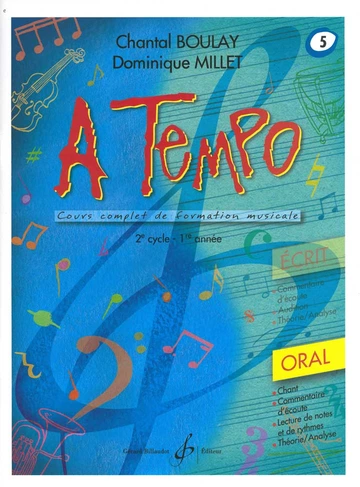
A tempo : oral. Volume 5
Cours de formation musicale
The ideal teaching of musical training.
12 lessons with varied exercises, including songs, traditional music, and excerpts from classical works: A Tempo is a lively method for teaching music theory. This oral volume, with its thoughtful teaching and streamlined presentation, is aimed at both children and adults.
A playlist on the Deezer, Spotify and Qobuz platforms is available on the publisher's education space: https://edu.billaudot.com.
Read moreDetails
| Instrument family | Musical training |
| Catalog classifications | Complete courses |
| Instrument nomenclature | formation musicale |
| Publisher | Éditions Billaudot |
| Collection | GAULTIER Emmanuel |
| Collection management | GAULTIER Emmanuel |
| Cotage | GB8364 |
| Total number of pages | 60 |
| Languages | French |
| Cycle / Level | Moderately difficult (cycle 2) |
| Target audience | Adults, Young people |
| Directory type | Work(s) from the repertoire |
| Copyright year | 2008 |
| EAN code | 9790043083641 |
| Audios | on Education area |
| EDU complements | Without |
| FM-specific content | A capella, Listening commentary, Intonations and intervals, Note reading, Rhythm reading, Polyrhythmic reading, melodies, Polyphony, Theory and analysis |



Description
Following on from the first four volumes of A Tempo cycle I, this new series follows the program of a second cycle over four years. It presents varied exercises based on excerpts from works and is structured around an instrumental or vocal performance. For each level, the educational content remains divided into two volumes and we find, as in the first cycle: — Oral; singing, listening commentary, theory, reading notes and rhythms. New activities are proposed: sung sight-reading and large excerpts from symphonic scores. — Written: listening, listening commentary, theory. These 2 volumes (oral, written) are independent and can also be used together.